THE MISSION
Accessible Learning for Every Bird Sound Enthusiast
Warble Bird Songs was created to dismantle the barriers to bird-by-ear learning. Our goal is to provide an intuitive platform where pattern recognition replaces complex theory, making nature's symphony accessible to everyone—from beginner birders to blind and low-vision users navigating the wild through sound.

Inspiration
Inspiration for Warble arose from the desire to give those with the greatest potential to be remarkable ear-birders a tool that allows them to independently learn these skills. While a sighted birder can make observational associations between the activities of a bird and the sound it makes, those who are blind or have low-vision cannot. For example, the agitated sound a bird makes while dive-bombing a cat can easily and accurately be interpreted as an alarm call by a sighted observer. The blind and those with low vision need non-visual avenues to learn these and other associations. For the sighted and blind alike, Warble builds skills in pattern recognition and identification that helps users interpret their soundscape.
Meet the People Behind Warble

Kristie Nelson
Founder & Scientific Content Lead
Kristie's brief bio will be here soon.
Jeffrey Blatt
Software Architect
Jeff's brief bio will be here soon.

Nora Livingston
Community Experience Lead
Nora leads our user testing to make the app as helpful as it can be. She is an avid ear-birder in California.
Why Trust Warble?
Quality
Thoughtful Curation
Validation
Community Tested
Accessibility
- High-quality audio recordings
- Clear patterns for easier learning
- Verified by experienced birders
- Designed with user feedback
- Tested for ease of use
- Human-centered design approach
Inclusive by Design
- Screen-reader friendly features
- High contrast for low vision
- Built for every level of experience
Gratitude
We are indebted to Nathan Pieplow for his ground-breaking work in the Peterson Field Guide to Bird Sounds of North America. This guide has revolutionized the field of auditory birding by defining terminology that was previously lacking and teaching readers how to read a spectrogram. These guides were a valuable reference in Warble’s creation and they provided a framework for our glossary section. There is much more information covered in the Peterson Guide to Bird Sounds than Warble overviews. We encourage you to purchase these incredible guide(s) and visit the associated online sound library of over 7,500 categorized sounds at petersonbirdsounds.com
Warble was made possible through a generous grant provided by the Eastern Sierra Bird Alliance. We appreciate their patience as we slowly developed this app.
We are grateful to the Cornell Lab of Ornithology for the use of recordings from the Macaulay Library and of eBird data. The lab’s pioneering work in citizen science and ornithology has transformed avian conservation, citizen engagement with it, and the world.
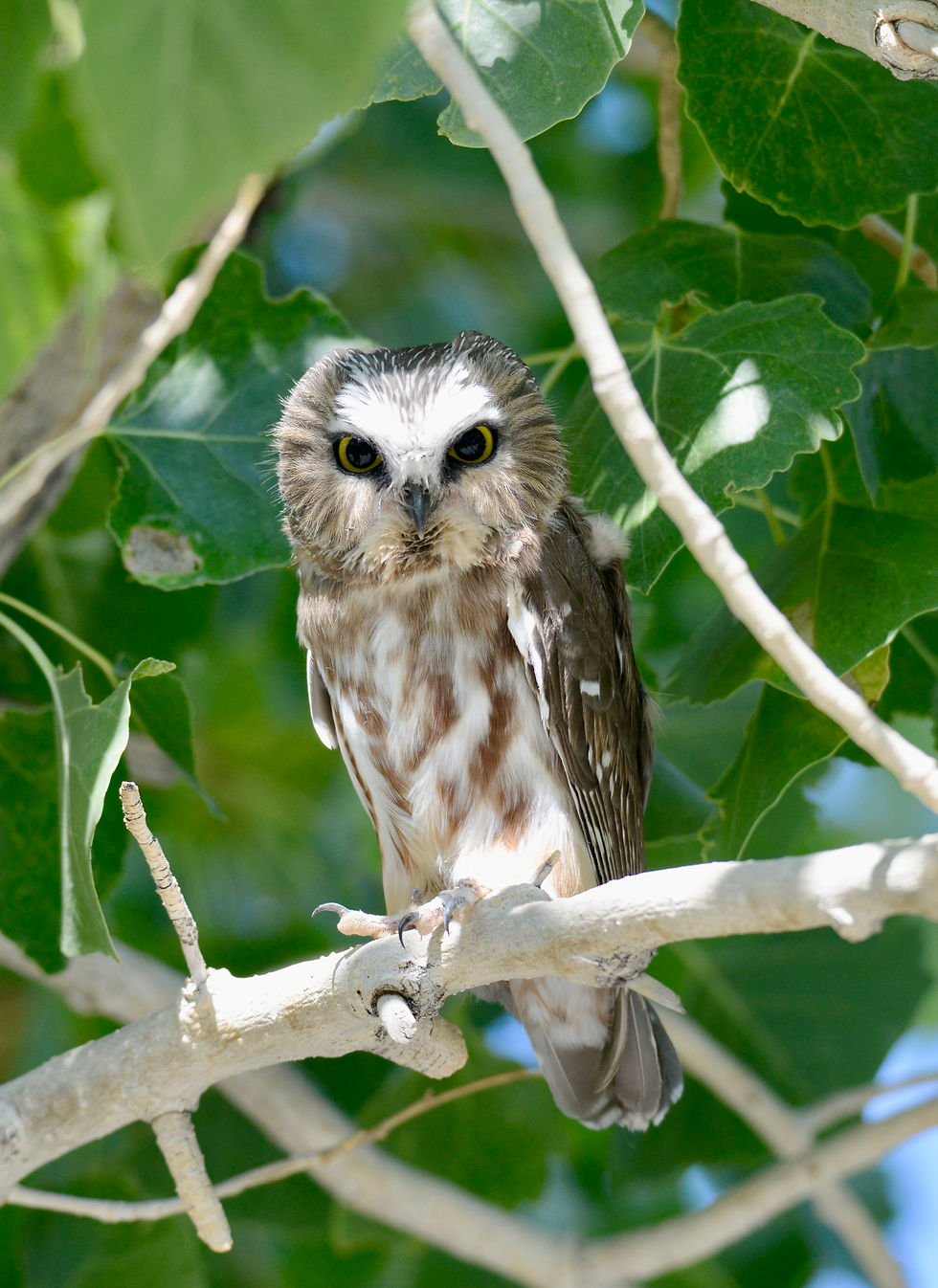
We thank the photographers who allowed us to use their outstanding work. This includes Becky Matsubara, Andy Reago, and Chrissy McClarren. All can be found on Flickr.
A special thanks goes to Xeno-Canto.org and all who submit sound files to this citizen science platform. In particular, we thank Richard Webster, whose lifetime of contributions from around the world helped Warble as well as humanity’s access to a digitized archive of bird sounds with special attention to regional detail. Other Xeno-Canto recordists well represented by Warble include Paul Marvin and Ed Pandolfino.
This credit section is a draft and does not reflect all of our credits.